Paid APIs
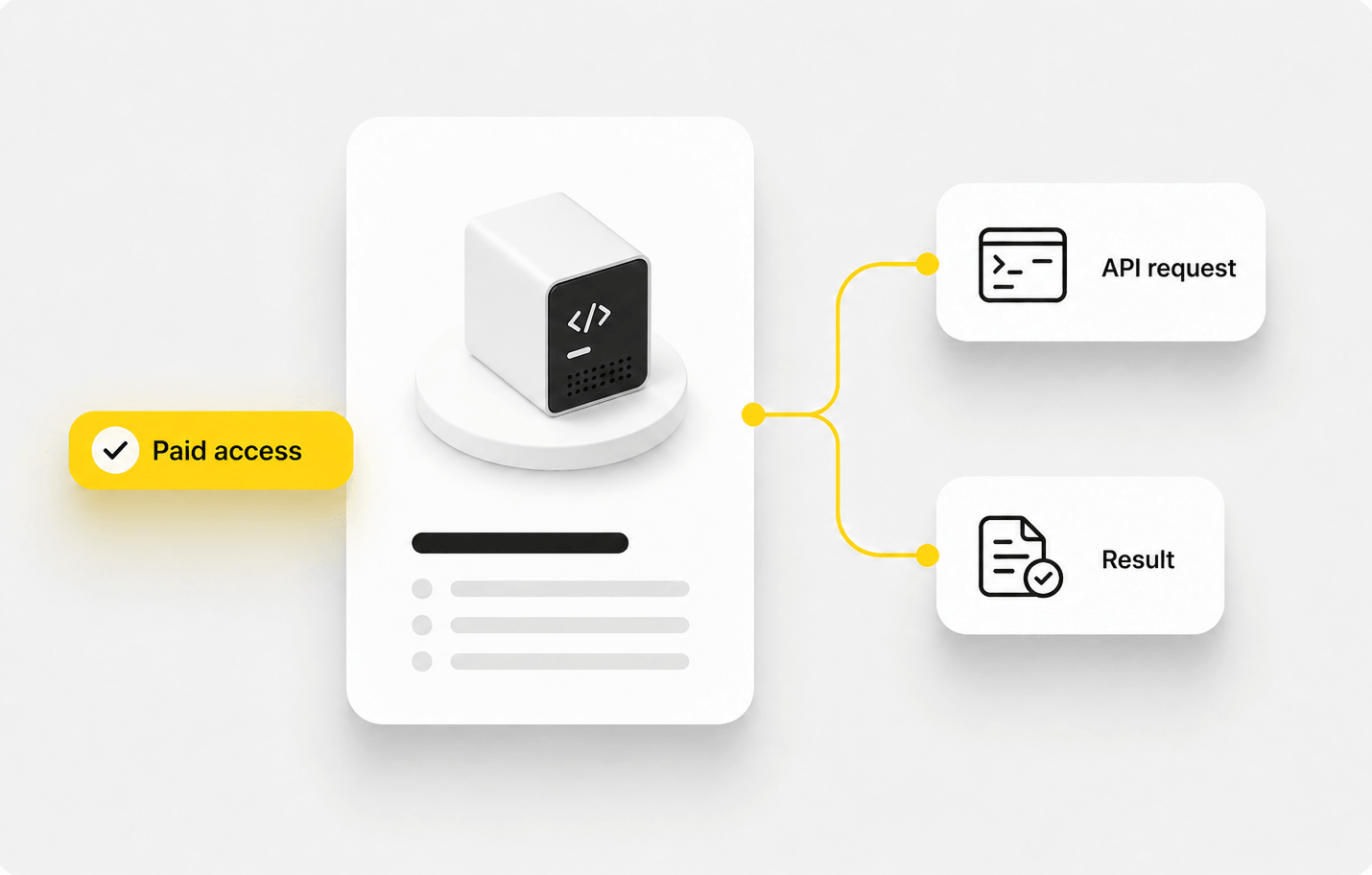
Charge for access to a protected endpoint or operation.
Let AI agents pay as they access your API.
[01]Use Cases
Apply API Payments to endpoints and software-generated resources delivered programmatically.
Charge for access to a protected endpoint or operation.
Sell datasets, search results, or generated reports.
Require payment before an AI agent runs a model, workflow, or specialized tool.
Return paid, software-generated results without a manual purchase step.
[02]How It Works
[03]What You Get
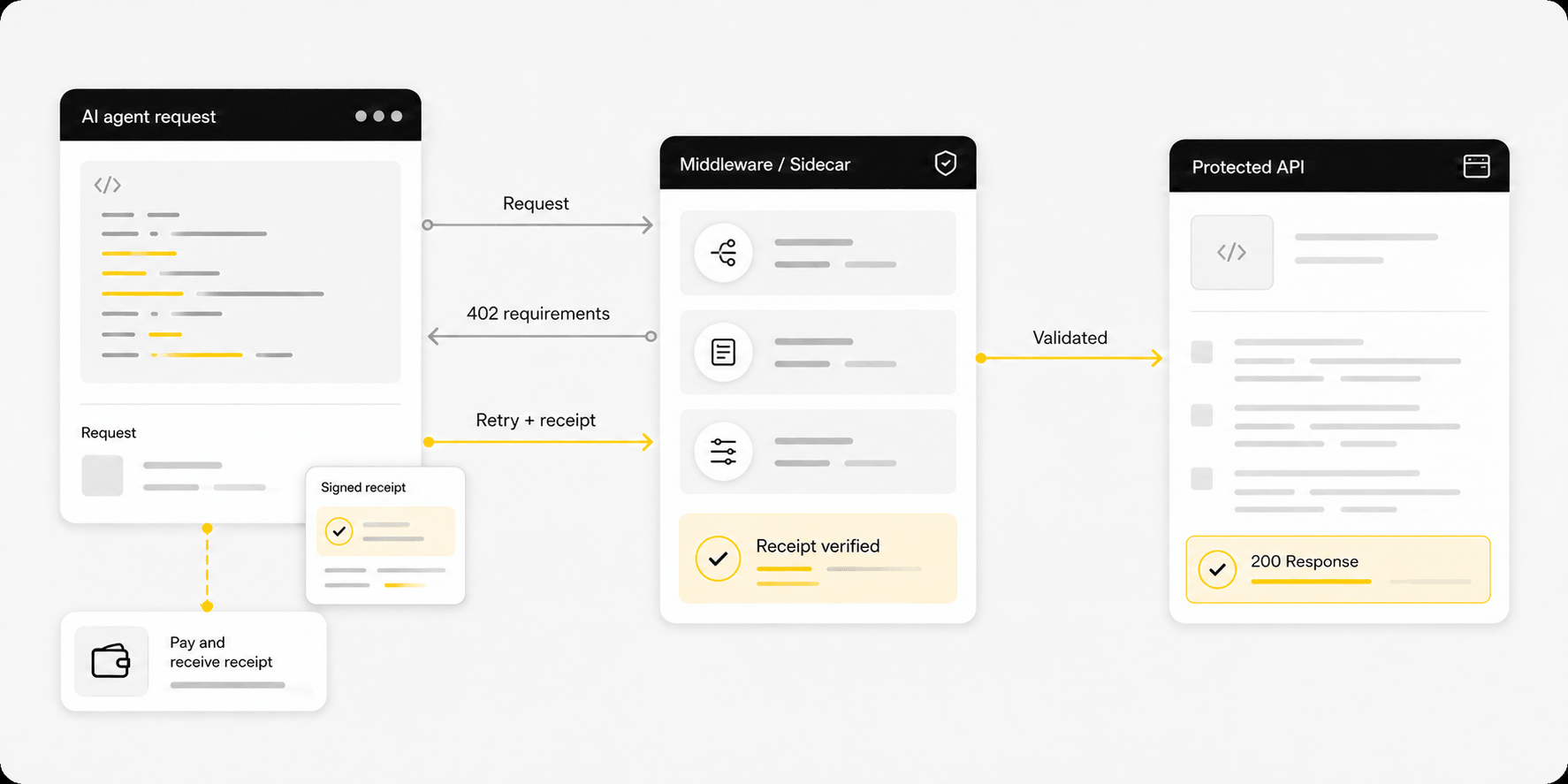
Return clear payment information when an AI agent requests a protected resource.
Set payment requirements for a specific API route or digital resource.
GOAT Flow confirms fiat payments through Stripe and cryptocurrency payments on the selected blockchain network before access is provided.
Give the protected service a verifiable result tied to the payment and request.
Protect routes through supported TypeScript or Go middleware, or a language-independent sidecar.
Keep payment inside the AI agent-to-API request flow.
[04]Integration & Onboarding
Best For: services that want to connect GOAT Flow payments to their existing backend and fulfillment flow.
Best For: APIs that want AI agents to complete payment and receive access directly inside the request flow.
[05]Example Flow
GET /v1/report
Accept: application/json
User-Agent: ExampleAgent/1.0
HTTP/1.1 402 Payment Required
amount: 2.00
currency: USDC
network: selected-networkstatus: confirmed
payment: verified
receipt: example-receipt
expires: example-expiryGET /v1/report
Payment-Receipt: example-receipt
Accept: application/jsonHTTP/1.1 200 OK
Content-Type: application/json
{ "result": "protected resource" }Choose each stage to see how the request changes. The example uses placeholder values and never contacts a real API.
[06]Payment, Fulfillment & Trust
Who Is Responsible for What
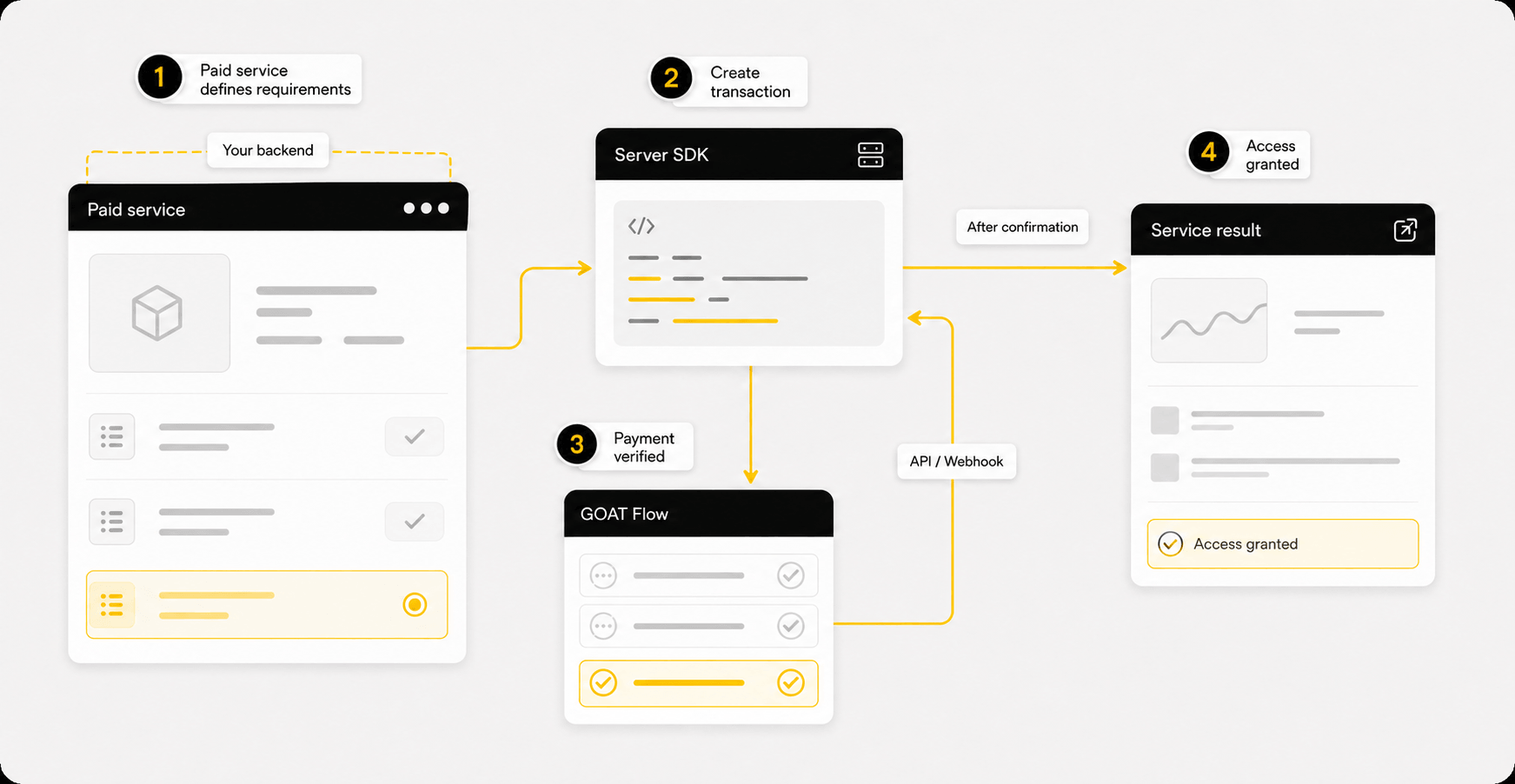
Defines paid routes, pricing, and response content, and remains responsible for access, availability, and service quality.
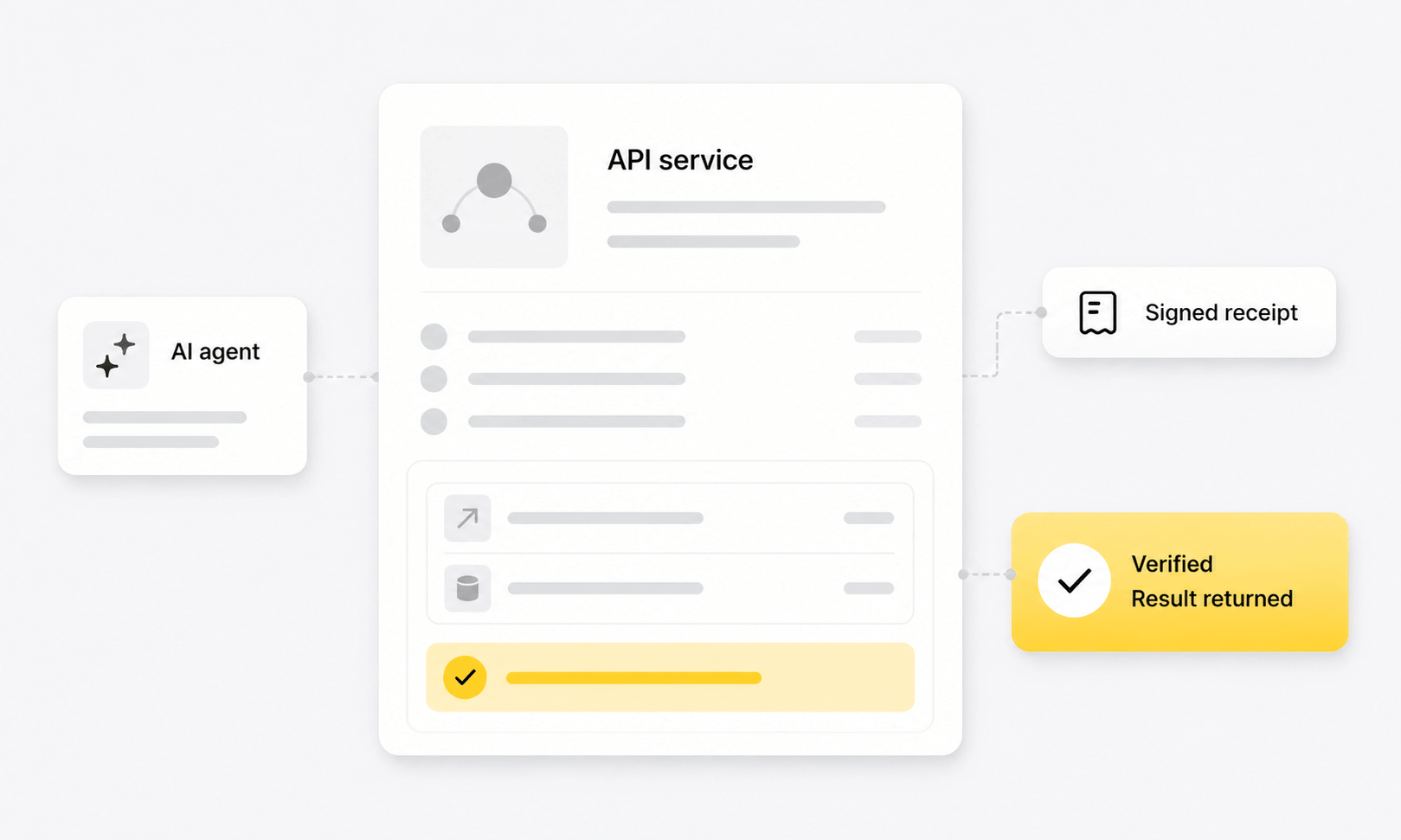
Creates and tracks the transaction, provides x402 payment requirements, receives fiat payment results from Stripe or verifies cryptocurrency payments on the selected blockchain network, and issues a signed receipt or authenticated status update.
Handles card details, authorization, processing, and settlement for eligible merchants.
Confirms cryptocurrency payments sent directly to the merchant’s configured wallet and makes the result available for verification.
Reads the x402 payment requirements, completes payment using a supported fiat account or cryptocurrency wallet, and retries the original request with the payment receipt.
Verifies the receipt signature, merchant, route, and expiry before allowing the request to reach the protected API.
Receives authenticated payment status updates and triggers asynchronous fulfillment when an immediate API response is not required.